A cancellation policy you can actually keep
Cancellations are part of the business. What hurts is not knowing what to do with the money already taken. Here is how to write a simple policy and apply it the same way every time.

Every season someone cancels: it rains, a child gets sick, plans change. If your policy depends on who is at the counter that day, every cancellation is a negotiation. If it is written down and your system applies it, it is a formality.
Three decisions and nothing more
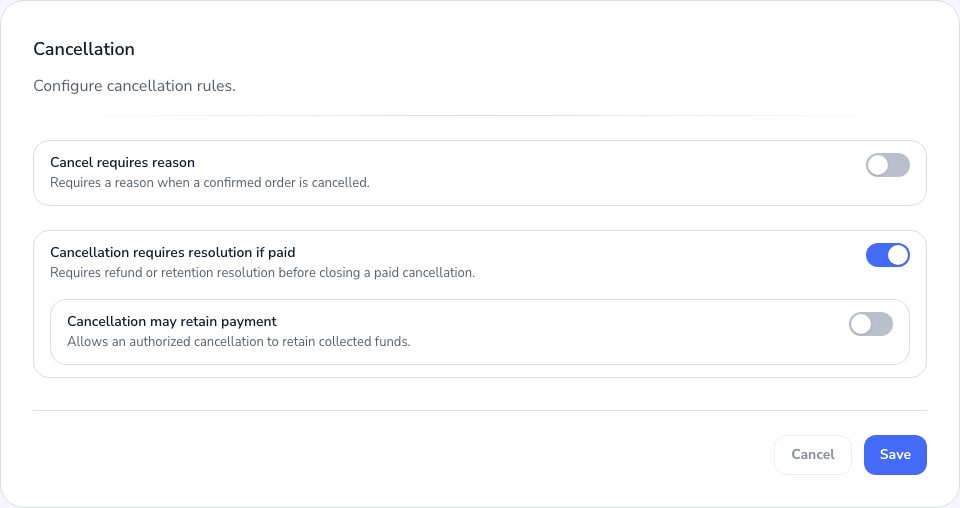
- 1Do you ask for a reason?Knowing why people cancel helps you adjust prices and schedules. Asking every time, in a short field, bothers nobody.
- 2What happens to what you already charged?Decide whether all, part or none is refunded depending on the notice given, and have someone settle it before the cancellation is closed.
- 3Can you keep the payment?For last-minute cancellations it is fair to keep part of it. Plan for it so it is an option, not an exception.
Write it for the customer, not the lawyer
A good policy fits in four lines: until when cancelling is free, what is charged after that, how to ask for a cancellation and when the refund arrives. If you need a paragraph of exceptions, the policy is too complicated.
- Up to 48 hours before: full refund.
- Between 48 and 24 hours: 30% is kept.
- Less than 24 hours or no notice: 100% is kept.
- The refund goes back to the same payment method within 5 days.
Adapt the deadlines to your business: a one-day rental is not handled like a two-week one. What matters is that the rule is the same for everyone.